

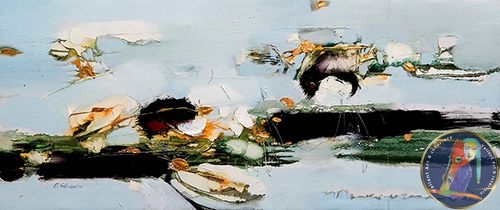
Composition 11 is a sophisticated exploration of the Mongolian landscape through the lens of Contemporary Figurative Expressionism. Measuring 42 x 100 cm, the painting utilizes an elongated horizontal format that mimics the vast, panoramic expanse of the Mongolian steppe. Ochirbat employs a rich, textured application of oil paint to bridge the gap between traditional nomadic subjects and modern abstraction.
Composition and Style
The painting is characterized by a rhythmic, almost musical arrangement of forms. Rather than a literal depiction of a scene, Ochirbat uses Abstract Modern techniques to deconstruct the environment into essential movements and colors.
The Horizon: The wide aspect ratio emphasizes the infinite horizon line typical of the artist’s homeland. The composition is divided into layered horizontal bands that suggest earth, distant mountains, and an atmospheric sky.
Figurative Elements: Emerging from the abstract brushwork are the subtle, gestural silhouettes of horses and riders—iconic symbols of Mongolian culture. These figures are not rendered with sharp photographic detail; instead, they are integrated into the landscape through fluid, energetic strokes, suggesting speed and the symbiotic relationship between man, animal, and nature.
Textural Depth: Ochirbat’s background in the 1990s Art Institute is evident in his confident handling of the medium. The canvas features varied impasto techniques, where thick layers of oil paint create a physical topography on the surface, catching the light and adding a tactile dimension to the “Expressionist” label.
Color Palette and Mood
The palette of Composition 11 is deeply evocative of the natural world, yet heightened for emotional impact:
Earth Tones: A base of ochres, deep burnt siennas, and umbers grounds the piece, representing the rugged terrain.
Atmospheric Accents: These grounded tones are punctuated by flashes of ethereal blues, muted violets, or sudden streaks of white, capturing the unpredictable light of the high-altitude Mongolian climate.
Emotional Resonance: The mood is one of “quiet energy.” While the subject matter is rooted in heritage, the execution feels avant-garde, reflecting Ochirbat’s position as a contemporary artist who honors tradition while pushing toward a universal abstract language.
Artistic Context
Created in 2008, during a period when Ochirbat was balancing his role as an art teacher at the “Industry and Art” school with his evolving solo career, Composition 11 serves as a bridge between his early “Action” exhibitions and his international showcases. It represents a mature synthesis of his high school and institute training, moving away from purely representational art toward a style that captures the spirit of a place rather than just its image.
A Masterpiece of Boundless Serenity
This evocative oil on canvas serves as a window into the soul of the Mongolian wilderness. Gundsambuu’s brushwork masterfully captures the ethereal transition of light across an endless horizon, where the rolling steppe meets a soft, sprawling sky. The painting’s true power lies in its profound sense of scale and silence; the solitary figures of horses are rendered not just as subjects, but as symbols of freedom and the enduring spirit of the nomadic landscape. With a rich, earthy palette and a sophisticated play of atmospheric perspective, Steppe Horse 2 is an investment in tranquility, bringing a sophisticated, contemplative energy to any modern interior. It is a rare blend of traditional heritage and contemporary minimalist aesthetic.
About Artist
Ariunbold Gundsambuu is a distinguished contemporary painter born in 1984 in the Tuv-Aimag province of Mongolia. His work is deeply rooted in the vast, open landscapes of his homeland, often utilizing the rich, expressive medium of oil on canvas to bring his visions to life. Gundsambuu is celebrated for his ability to translate the quiet majesty of the Mongolian steppe into a modern visual language, capturing both the physical scale and the spiritual essence of the region with remarkable technical precision.
