
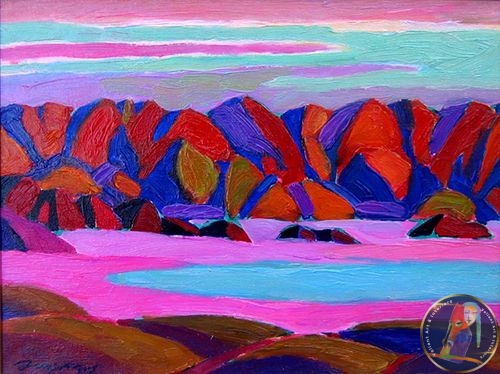
Sudalvar II is a compact yet powerful exploration of form and texture, measuring 30 x 40cm. The title, which translates to “Study” or “Sketch” in Mongolian, suggests an intimate, analytical approach to the subject. In this piece, Tsagaandari moves away from pure realism, leaning into a modern-contemporary interpretation of organic forms.
The composition is characterized by a sophisticated interplay between the figurative and the abstract. While the painting hints at natural structures—reminiscent of the intricate vein patterns found in leaves or the weathered fissures of Mongolian rock formations—it remains focused on the rhythm of lines and the weight of the oil medium. The brushwork is deliberate, showing the artist’s transition from her monumental art background to the nuanced delicacy of a freelance contemporary master.
Color Palette and Technique
Tsagaandari employs a refined, earthy color palette that pays homage to the Mongolian landscape without being literal.
Tonal Depth: The canvas features a base of muted, atmospheric tones—deep umbers, slate greys, and ochres—that provide a sense of grounded permanence.
Luminous Accents: These darker fields are punctuated by subtle highlights of bone white and pale gold, suggesting the play of light over textured surfaces.
The Oil Medium: The use of oil is masterful; the artist builds up layers to create a physical “skin” on the canvas. The application varies from thin, translucent glazes to thicker, impasto strokes that give the “Sudalvar” (study) a tactile, three-dimensional quality.
Style and Artistic Context
Created in 2005, during her established period as a freelance artist, Sudalvar II represents Tsagaandari’s mature style. It bridges the gap between the nature-inspired traditions of Mongolian art and the minimalist abstraction of the global contemporary scene.
The lines are fluid yet structured, echoing her years as a teacher at the College of Fine Art and her early work in monumental ateliers. There is a sense of “controlled spontaneity” in the work; every stroke feels necessary, contributing to a harmonious whole that invites the viewer to look closer at the beauty of small-scale details.