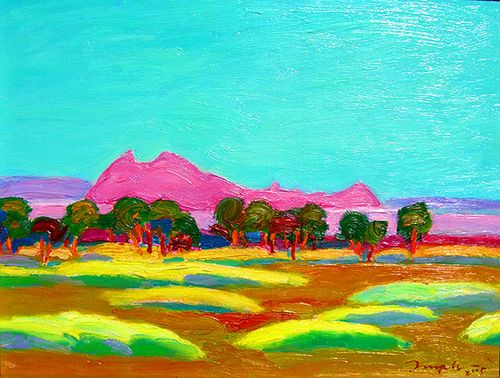
Sudalvar Vii

Enkhjargal Tsagaandari , 2006 , Oil On Canvas

Sudalvar VII is a compelling 2006 oil on canvas painting by the renowned Mongolian artist Enkhjargal Tsagaandari. Measuring 30 x 40 inches, this piece serves as a sophisticated bridge between the raw, expansive heritage of the Mongolian landscape and the refined sensibilities of contemporary abstraction.


Visual Composition and Style

The painting is a masterclass in Tsagaandari’s signature blend of Modernism and Nature-inspired Figurative art. While the title Sudalvar (often translating to “Study” or “Sketch” in Mongolian) suggests a preliminary exercise, the execution is a fully realized exploration of texture and light.

  • Color Palette: The work typically utilizes an earthy, nuanced palette that mirrors the high-altitude light of the Mongolian steppe. One can expect a sophisticated interplay of ochres, deep ambers, and muted grays, punctuated by the luminous quality inherent in professional-grade oil pigments.

  • Technique: Drawing from his experience in Monumental Art, Tsagaandari applies paint with a structural intent. The brushwork is rhythmic and layered, creating a surface that feels weathered yet intentional. There is a palpable sense of movement, suggesting the shifting winds or the ancient geological history of his homeland.

  • Abstraction vs. Figuration: In Sudalvar VII, the “Figurative” element is often subtle. Rather than a literal depiction of a subject, the artist uses abstract forms to evoke the essence of figures or natural landmarks. The shapes may hint at the silhouettes of mountains, the flow of water, or the presence of nomadic life, distilled into their most basic, emotional geometry.


Context and Artistic Pedigree

Created during Tsagaandari’s prolific period as a freelance artist (beginning in 2000), this work benefits from his decades of academic and institutional rigor.

  • The Mongolian Influence: Having been born in Ulaanbaatar and worked across various aimags (provinces), Tsagaandari’s work is deeply rooted in the Mongolian identity. Sudalvar VII reflects the transition from the socialist-realist traditions of his early career (the 1980s) toward the creative liberation found in global Contemporary Art.

  • A Legacy of Craft: His background as a teacher at the College of Fine Art is evident in the painting’s technical precision. The balance between the “Landscape” and “Abstract” styles shows a creator who understands the rules of classical composition well enough to break them effectively.


Historical Significance

By 2006, Tsagaandari had already established an international presence, with exhibitions ranging from Vienna, Austria to China. Sudalvar VII represents the artist at the height of his conceptual powers—moving away from the “Spring” exhibitions of his youth toward a more philosophical, “Modern” interpretation of the natural world.
  • Enkhjargal Tsagaandari
  • Figurative, Photorealism
  • Oil On Canvas
  • ENJ25/005
  • 30 x 40

Add Your Comment

Mongolian Art Gallery © 2025. All Rights Reserved
Privacy Policy / Terms of Use

Sudalvar VII is a compelling 2006 oil on canvas painting by the renowned Mongolian artist Enkhjargal Tsagaandari. Measuring 30 x 40 inches, this piece serves as a sophisticated bridge between the raw, expansive heritage of the Mongolian landscape and the refined sensibilities of contemporary abstraction.


Visual Composition and Style

The painting is a masterclass in Tsagaandari’s signature blend of Modernism and Nature-inspired Figurative art. While the title Sudalvar (often translating to “Study” or “Sketch” in Mongolian) suggests a preliminary exercise, the execution is a fully realized exploration of texture and light.

  • Color Palette: The work typically utilizes an earthy, nuanced palette that mirrors the high-altitude light of the Mongolian steppe. One can expect a sophisticated interplay of ochres, deep ambers, and muted grays, punctuated by the luminous quality inherent in professional-grade oil pigments.

  • Technique: Drawing from his experience in Monumental Art, Tsagaandari applies paint with a structural intent. The brushwork is rhythmic and layered, creating a surface that feels weathered yet intentional. There is a palpable sense of movement, suggesting the shifting winds or the ancient geological history of his homeland.

  • Abstraction vs. Figuration: In Sudalvar VII, the “Figurative” element is often subtle. Rather than a literal depiction of a subject, the artist uses abstract forms to evoke the essence of figures or natural landmarks. The shapes may hint at the silhouettes of mountains, the flow of water, or the presence of nomadic life, distilled into their most basic, emotional geometry.


Context and Artistic Pedigree

Created during Tsagaandari’s prolific period as a freelance artist (beginning in 2000), this work benefits from his decades of academic and institutional rigor.

  • The Mongolian Influence: Having been born in Ulaanbaatar and worked across various aimags (provinces), Tsagaandari’s work is deeply rooted in the Mongolian identity. Sudalvar VII reflects the transition from the socialist-realist traditions of his early career (the 1980s) toward the creative liberation found in global Contemporary Art.

  • A Legacy of Craft: His background as a teacher at the College of Fine Art is evident in the painting’s technical precision. The balance between the “Landscape” and “Abstract” styles shows a creator who understands the rules of classical composition well enough to break them effectively.


Historical Significance

By 2006, Tsagaandari had already established an international presence, with exhibitions ranging from Vienna, Austria to China. Sudalvar VII represents the artist at the height of his conceptual powers—moving away from the “Spring” exhibitions of his youth toward a more philosophical, “Modern” interpretation of the natural world.