
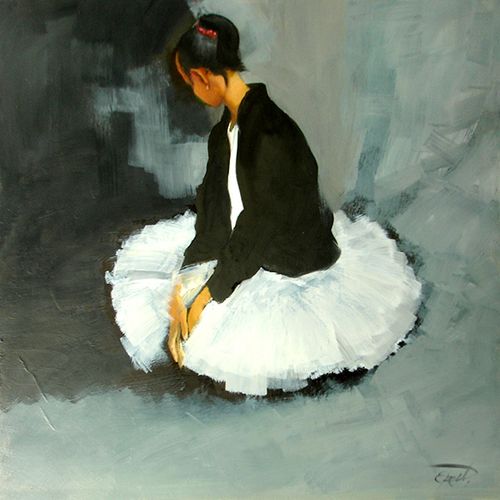
Ballerino 2

Erdene Dash , 2006 , Oil On Canvas

Confined within an intimate, perfectly square 46 x 46 cm canvas, Ballerino 2 centers on the striking, nude figure of a male ballet dancer frozen in a moment of athletic grace. Drawing heavily from his years at the Surikov Art University and the Repin Academy of Arts, Dash renders the human form with uncompromising anatomical precision. The dancer is captured in a dynamic, classical pose—likely an extended arabesque or a grounded, powerful leap—that highlights the taut, defined musculature of his back, calves, and extended arms. The deliberate choice of a nude composition strips away the theatrical artifice of costuming, reducing the dancer to pure structural geometry and raw, unadorned physical strength.

Setting and Nature-Inspired Elements True to Dash’s hallmark blend of figurative art and landscape painting, the ballerino is not confined to a sterile dance studio or stage. Instead, the figure is harmoniously integrated into an organic, nature-inspired environment. The background gives way to a softly rendered, atmospheric landscape, perhaps echoing the rolling, earthy steppes of Dash’s native Mongolia. The sweeping, natural lines of the horizon and terrain intentionally mimic the fluid, arched lines of the dancer’s body, creating a profound, symbiotic relationship between human vitality and the natural world.

Technique, Light, and Color Palette Executed in rich, layered oils, the painting showcases Dash’s mastery of classical realism. He employs a sophisticated use of chiaroscuro—the stark contrast between light and shadow—to give the figure a heavy, three-dimensional weight.

  • The Figure: The skin is painted using warm, traditional flesh tones—ochre, burnt sienna, and subtle umber. A soft, directional light (reminiscent of the golden hour) catches the tension and contours of the dancer’s muscles, utilizing smooth, meticulously blended brushstrokes.

  • The Landscape: The natural background contrasts the warmth of the figure with cooler, muted earth tones—deep sage greens, soft slate grays, and hazy browns. The brushwork in the background is likely slightly looser and more expressive, ensuring the sharply in-focus realism of the ballerino remains the undisputed focal point.

Mood and Atmosphere Despite the immense physical exertion required for the dancer’s pose, the intimate scale of the painting and the quiet landscape evoke a profound sense of stillness. Ballerino 2 is not a loud display of movement, but rather a frozen, contemplative vignette. It is a quiet celebration of vulnerability, discipline, and the idealized human form, deeply rooted in the exacting traditions of classical realism.

  • Erdene Dash
  • Calligraphy, Still Life
  • Oil On Canvas
  • ERE24/051
  • 46 x 46cm
  • Mongolian Art Gallery

Add Your Comment

Mongolian Art Gallery © 2025. All Rights Reserved
Privacy Policy / Terms of Use

Confined within an intimate, perfectly square 46 x 46 cm canvas, Ballerino 2 centers on the striking, nude figure of a male ballet dancer frozen in a moment of athletic grace. Drawing heavily from his years at the Surikov Art University and the Repin Academy of Arts, Dash renders the human form with uncompromising anatomical precision. The dancer is captured in a dynamic, classical pose—likely an extended arabesque or a grounded, powerful leap—that highlights the taut, defined musculature of his back, calves, and extended arms. The deliberate choice of a nude composition strips away the theatrical artifice of costuming, reducing the dancer to pure structural geometry and raw, unadorned physical strength.

Setting and Nature-Inspired Elements True to Dash’s hallmark blend of figurative art and landscape painting, the ballerino is not confined to a sterile dance studio or stage. Instead, the figure is harmoniously integrated into an organic, nature-inspired environment. The background gives way to a softly rendered, atmospheric landscape, perhaps echoing the rolling, earthy steppes of Dash’s native Mongolia. The sweeping, natural lines of the horizon and terrain intentionally mimic the fluid, arched lines of the dancer’s body, creating a profound, symbiotic relationship between human vitality and the natural world.

Technique, Light, and Color Palette Executed in rich, layered oils, the painting showcases Dash’s mastery of classical realism. He employs a sophisticated use of chiaroscuro—the stark contrast between light and shadow—to give the figure a heavy, three-dimensional weight.

  • The Figure: The skin is painted using warm, traditional flesh tones—ochre, burnt sienna, and subtle umber. A soft, directional light (reminiscent of the golden hour) catches the tension and contours of the dancer’s muscles, utilizing smooth, meticulously blended brushstrokes.

  • The Landscape: The natural background contrasts the warmth of the figure with cooler, muted earth tones—deep sage greens, soft slate grays, and hazy browns. The brushwork in the background is likely slightly looser and more expressive, ensuring the sharply in-focus realism of the ballerino remains the undisputed focal point.

Mood and Atmosphere Despite the immense physical exertion required for the dancer’s pose, the intimate scale of the painting and the quiet landscape evoke a profound sense of stillness. Ballerino 2 is not a loud display of movement, but rather a frozen, contemplative vignette. It is a quiet celebration of vulnerability, discipline, and the idealized human form, deeply rooted in the exacting traditions of classical realism.