

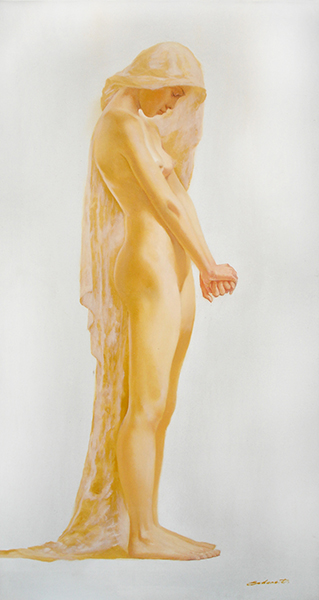
The painting is set on a distinctive vertical canvas (93 x 46 cm), a choice that emphasizes the downward trajectory of the rain and the elongated grace of the central figure.
The Figure: At the heart of the composition is a nude figure, rendered with the anatomical precision characteristic of the Russian academic tradition. The skin is depicted with a luminous, pearlescent quality, reflecting the cool, diffused light of an overcast sky. The figure’s pose is one of quiet introspection—perhaps slightly bowed or tilting the head upward—suggesting a moment of total immersion in the elements.
The Landscape: The background is not merely a backdrop but an active participant in the scene. Dash utilizes the “landscape” tag to create a sense of vast, open space, likely inspired by the Mongolian steppe, though softened here by a thick, atmospheric veil of moisture.
Atmosphere and Technique
Dash’s technical prowess shines in his depiction of the elemental environment.
The Rain: Rather than literal streaks, the rain is captured through a sophisticated play of texture and light. The artist uses subtle glazing and fine brushwork to suggest mist, the dampness of the air, and the way water clings to and rolls off the human form. There is a palpable sense of “wetness” that permeates the canvas.
Color Palette: The artist employs a restrained, earthy palette. Muted greys, soft blues, and cool flesh tones dominate the work, punctuated perhaps by the dark, dampened greens or browns of the earth. This low-contrast scheme enhances the painting’s tranquil, meditative mood.
Style and Symbolism
Rain serves as a bridge between Figurative Realism and a more poetic, nature-inspired symbolism.
The Human-Nature Connection: By placing a nude figure in a rainy landscape, Dash strips away the markers of civilization, focusing on the raw, tactile relationship between humanity and the earth.
Academic Influence: The influence of his education at the Surikov and Repin Academies is evident in the sophisticated handling of volume and the soft transitions of light (sfumato), which prevent the realism from feeling clinical.