
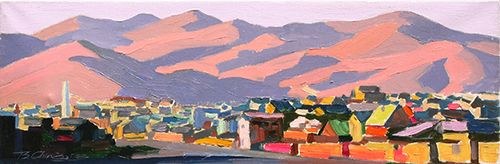
Ger District 7 is a masterclass in contemporary Mongolian Photorealism, presented in a striking panoramic format (23 x 69cm). The painting captures the raw, atmospheric reality of the “ger districts”—the sprawling residential areas on the periphery of Ulaanbaatar where traditional nomadic dwellings meet the encroaching urban sprawl.
Visual Composition and Subject Matter
The composition is dominated by a wide, cinematic perspective that emphasizes the vastness of the Mongolian landscape, even within a settled environment.
The Foreground: The lower third of the canvas features a detailed rendering of the rugged terrain. Tulgabaatar meticulously depicts the textures of the earth—loose gravel, sparse patches of dry grass, and the subtle indentations of footpaths. The realism is so precise that one can almost feel the cold, arid quality of the soil.
The Middle Ground: The heart of the painting focuses on a cluster of traditional gers (yurts) and modest wooden structures. These are enclosed by the characteristic wooden fences (khashaa) that define private plots in these districts. The artist uses Figurative Art techniques to ground the scene in human reality, showing the wear and tear on the structures—weathered wood, the heavy felt of the gers, and the occasional modern intrusion like a satellite dish or electrical wiring.
The Background: In the distance, the rolling hills of the Mongolian steppe rise to meet a pale, expansive sky. The transition from the dense, textured living area to the soft, hazy slopes of the mountains creates a profound sense of depth and silence.
Lighting and Atmosphere
True to the Realism movement, Tulgabaatar employs a neutral, honest light source that suggests a late autumn or early spring day.
Color Palette: The palette is dominated by earthy tones—ochres, dusty browns, muted greys, and the stark white of the ger covers. These “cold” tones reflect the harsh climate of Ulaanbaatar, known as the coldest capital city in the world.
Atmospheric Perspective: There is a slight haze in the distance, characteristic of the coal smoke that often settles over the ger districts during colder months. This subtle detail adds a layer of social commentary to the work, highlighting the environmental challenges of the region without sacrificing the aesthetic beauty of the Landscape.
Artistic Significance
As an artist born and raised in Ulaanbaatar, Tulgabaatar’s work is more than just a visual record; it is a Portrait of a changing nation. By applying high-level Photorealism to a subject that is often viewed as “impoverished” or “peripheral,” he elevates the everyday experience of thousands of Mongolians to the level of fine art. The painting captures the tension between the ancient nomadic heritage (the ger) and the permanent, static nature of the modern city.