
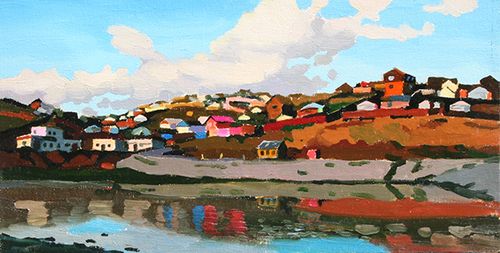
In Ger District 5 (2008), Chinggis Tulgabaatar captures a moment of quiet, hyper-realistic stillness within the sprawling residential fringes of Ulaanbaatar. Despite its modest dimensions (23 x 45 cm), the painting utilizes a wide, panoramic format to emphasize the horizontal expanse of Mongolia’s unique urban landscape—a place where nomadic tradition and permanent settlement collide.
Composition and Perspective
The work is framed from a low, grounded perspective, placing the viewer directly on the unpaved, rutted dirt tracks that define the district. The composition is structured around the rhythm of the khashaa—the weathered wooden fences that partition the land. These fences act as leading lines, drawing the eye across the canvas and creating a sense of depth that belies the painting’s small physical size.
Subject Matter and Details
At the heart of the scene is the Ger, the traditional felt dwelling of the Mongolian people. Tulgabaatar renders the structure with photorealistic precision:
Textural Contrast: The soft, off-white felt of the ger stands in sharp contrast to the rough, splintered grain of the surrounding wooden fences.
The Atmosphere: A thin wisp of smoke might rise from a metal stovepipe, suggesting the interior life hidden within the walls.
Infrastructure: True to the “Realism” style, the artist does not shy away from the utilitarian aspects of the district. Dilapidated power lines and leaning utility poles crisscross the sky, serving as a reminder of the area’s rapid, often informal modernization.
Light and Color Palette
Tulgabaatar’s mastery of light is the defining feature of this piece. The color palette is dominated by earthy, muted tones:
The Ground: Ochres, dusty browns, and greys represent the parched earth, punctuated by the deep shadows found in the tire tracks.
The Sky: A pale, high-altitude blue or perhaps a hazy, atmospheric grey that suggests the cold, crisp air of the Mongolian plateau.
The Light: The scene is likely bathed in the “golden hour” or a harsh, direct midday sun, which creates high-contrast shadows that give the wooden slats of the fences a three-dimensional, tactile quality.
Thematic Essence
While listed as “Figurative Art,” the human presence in Ger District 5 is often felt rather than seen. If a figure is present, they are usually depicted in a moment of solitary labor or transit, emphasizing the resilience required to live in this transitional environment. The painting serves as a bridge between the Landscape tradition—honoring the vast Mongolian horizon—and a Portrait of a changing society, capturing the dignity of a lifestyle that exists between the ancient steppe and the modern city.