Face Composition

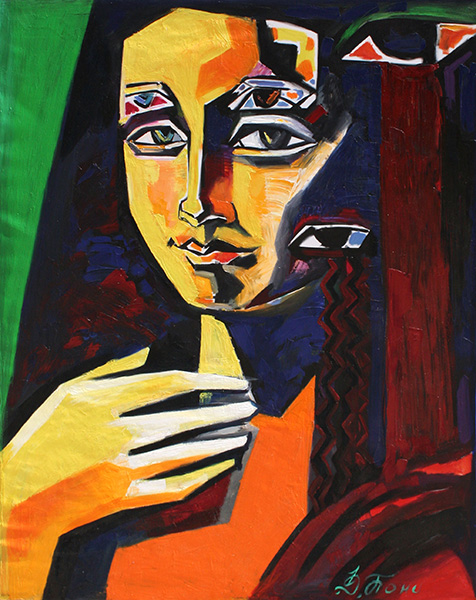
Ganbold / Bono Dorjderem , 2008 , Oil On Canvas

A Kaleidoscope of the Soul

What sets “Face” apart is its bold, Cubist-inspired deconstruction of identity. This isn’t just a portrait; it is a visual exploration of the “internal gaze.”

The painting’s unique selling point lies in its complex layering of vision. By incorporating multiple eyes across the canvas—some looking directly at the viewer, others peering from the shadows of the hair—Bono captures the multifaceted nature of human consciousness. The composition utilizes a vibrant, high-contrast palette of sunny yellows, deep cerulean blues, and earthy ochres, applied with energetic, visible brushstrokes. The juxtaposition of sharp, geometric planes with fluid, organic forms creates a rhythmic tension that keeps the eye moving. It is a monumental piece that transforms a domestic subject into a psychological landscape, making it a powerful focal point for any contemporary collection.


Composition & Style

The composition is dominated by a central figure, yet the “face” is split into several emotional zones.

  • The Left Side: Bathed in bright yellow, representing clarity or the public persona.

  • The Right Side: Submerged in deep blues and dark reds, suggesting the subconscious or the hidden self.

  • The Hand: Executed in a stylized, almost architectural manner, it grounds the ethereal quality of the face with a sense of physical presence.


About the Artist

Ganbold (Bono) Dorjderem was born in 1982 in Ulaanbaatar, Mongolia. A prominent figure in the contemporary Mongolian art scene, Bono is known for his ability to synthesize nomadic cultural heritage with avant-garde Western techniques. His work often explores themes of human emotion, spirituality, and the passage of time, characterized by a fearless use of color and a structural approach to the human form. Since his emergence in the early 2000s, his large-scale oil paintings have become sought-after pieces that bridge the gap between traditional Mongolian aesthetics and global modernism.
  • Ganbold / Bono Dorjderem
  • Ulaanbaatar, Mongolia
  • Abstract, Figurative, Modern/Contemporary, Nude
  • Oil On Canvas
  • GND81/006

Add Your Comment

Mongolian Art Gallery © 2025. All Rights Reserved
Privacy Policy / Terms of Use

A Kaleidoscope of the Soul

What sets “Face” apart is its bold, Cubist-inspired deconstruction of identity. This isn’t just a portrait; it is a visual exploration of the “internal gaze.”

The painting’s unique selling point lies in its complex layering of vision. By incorporating multiple eyes across the canvas—some looking directly at the viewer, others peering from the shadows of the hair—Bono captures the multifaceted nature of human consciousness. The composition utilizes a vibrant, high-contrast palette of sunny yellows, deep cerulean blues, and earthy ochres, applied with energetic, visible brushstrokes. The juxtaposition of sharp, geometric planes with fluid, organic forms creates a rhythmic tension that keeps the eye moving. It is a monumental piece that transforms a domestic subject into a psychological landscape, making it a powerful focal point for any contemporary collection.


Composition & Style

The composition is dominated by a central figure, yet the “face” is split into several emotional zones.

  • The Left Side: Bathed in bright yellow, representing clarity or the public persona.

  • The Right Side: Submerged in deep blues and dark reds, suggesting the subconscious or the hidden self.

  • The Hand: Executed in a stylized, almost architectural manner, it grounds the ethereal quality of the face with a sense of physical presence.


About the Artist

Ganbold (Bono) Dorjderem was born in 1982 in Ulaanbaatar, Mongolia. A prominent figure in the contemporary Mongolian art scene, Bono is known for his ability to synthesize nomadic cultural heritage with avant-garde Western techniques. His work often explores themes of human emotion, spirituality, and the passage of time, characterized by a fearless use of color and a structural approach to the human form. Since his emergence in the early 2000s, his large-scale oil paintings have become sought-after pieces that bridge the gap between traditional Mongolian aesthetics and global modernism.