
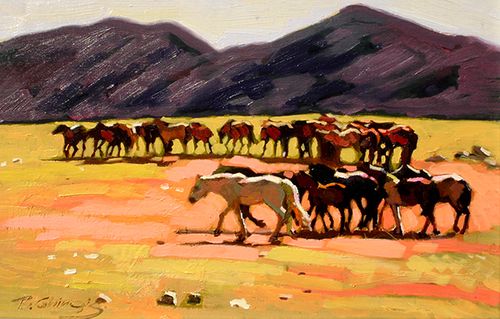
Mountain

Chinggis Tulgabaatar , 2007 , Oil On Canvas

At just 25 x 30 cm, “Mountain” is an intimate study of geological form. Tulgabaatar utilizes the rich, slow-drying properties of oil paint to create a surface that mimics the rugged textures of stone and earth.

Composition and Perspective

The painting likely employs a tightly cropped composition. Rather than a wide-angle view of a mountain range, Tulgabaatar often focuses on the “portrait” of a specific peak or rock face. This approach bridges the gap between Landscape and Figurative Art, treating the mountain as a silent, monumental subject with its own unique “features” and character.

Light and Texture

Following the principles of Photorealism, the artist pays meticulous attention to the interplay of light and shadow.

  • The Palette: Expect a sophisticated range of earth tones—ochres, deep umbers, and cool slate greys—offset by the sharp, brilliant whites of high-altitude snow or the harsh glare of the Mongolian sun.

  • The Surface: The brushwork is precise and controlled, characteristic of Tulgabaatar’s Realist style. Every fissure in the rock and every drift of snow is rendered with a clarity that invites the viewer to look closer, making the small canvas feel much larger than its physical boundaries.

Context and Artist Style

Created in 2007, when Tulgabaatar was approximately 22 years old, this work represents the artist’s burgeoning mastery over the Photorealistic style that would later define his career.

Born in Ulaanbaatar, Tulgabaatar belongs to a generation of Mongolian artists who blend traditional appreciation for their country’s vast natural beauty with modern technical precision. “Mountain” is not just a depiction of nature; it is a testament to the endurance and stillness of the Mongolian steppe.

Style Intersection: While categorized under Nature and Landscape, the “portrait-like” quality of the mountain reflects Tulgabaatar’s skill in Portraiture. He applies the same level of psychological depth to a landform as he would to a human face, seeking the “soul” of the stone.

Summary of Impact

“Mountain” (2007) serves as a window into the serene and formidable world of the Mongolian highlands. Through Oil on canvas, Chinggis Tulgabaatar transforms a small piece of fabric into a powerful meditation on permanence, light, and the raw beauty of the natural world.
  • Chinggis Tulgabaatar
  • Nature, Photorealism
  • Oil On Canvas
  • CHI72/017
  • 25 x 30cm

Add Your Comment

Mongolian Art Gallery © 2025. All Rights Reserved
Privacy Policy / Terms of Use

At just 25 x 30 cm, “Mountain” is an intimate study of geological form. Tulgabaatar utilizes the rich, slow-drying properties of oil paint to create a surface that mimics the rugged textures of stone and earth.

Composition and Perspective

The painting likely employs a tightly cropped composition. Rather than a wide-angle view of a mountain range, Tulgabaatar often focuses on the “portrait” of a specific peak or rock face. This approach bridges the gap between Landscape and Figurative Art, treating the mountain as a silent, monumental subject with its own unique “features” and character.

Light and Texture

Following the principles of Photorealism, the artist pays meticulous attention to the interplay of light and shadow.

  • The Palette: Expect a sophisticated range of earth tones—ochres, deep umbers, and cool slate greys—offset by the sharp, brilliant whites of high-altitude snow or the harsh glare of the Mongolian sun.

  • The Surface: The brushwork is precise and controlled, characteristic of Tulgabaatar’s Realist style. Every fissure in the rock and every drift of snow is rendered with a clarity that invites the viewer to look closer, making the small canvas feel much larger than its physical boundaries.

Context and Artist Style

Created in 2007, when Tulgabaatar was approximately 22 years old, this work represents the artist’s burgeoning mastery over the Photorealistic style that would later define his career.

Born in Ulaanbaatar, Tulgabaatar belongs to a generation of Mongolian artists who blend traditional appreciation for their country’s vast natural beauty with modern technical precision. “Mountain” is not just a depiction of nature; it is a testament to the endurance and stillness of the Mongolian steppe.

Style Intersection: While categorized under Nature and Landscape, the “portrait-like” quality of the mountain reflects Tulgabaatar’s skill in Portraiture. He applies the same level of psychological depth to a landform as he would to a human face, seeking the “soul” of the stone.

Summary of Impact

“Mountain” (2007) serves as a window into the serene and formidable world of the Mongolian highlands. Through Oil on canvas, Chinggis Tulgabaatar transforms a small piece of fabric into a powerful meditation on permanence, light, and the raw beauty of the natural world.