
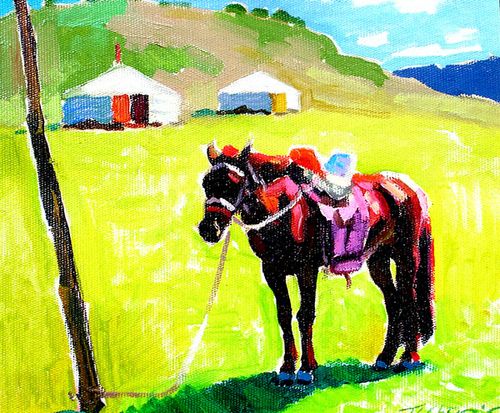
Single Horse 2 is a masterclass in modern Mongolian realism, capturing the silent, stoic spirit of the steppe. Painted in 2006, this oil-on-canvas work by Chinggis Tulgabaatar demonstrates a technical maturity that belies the artist’s young age—he was just 21 at the time of its creation.
Visual Composition and Style
Despite its modest dimensions (26 x 33cm), the painting carries a monumental presence. Tulgabaatar utilizes a blend of Photorealism and Figurative Art to elevate a traditional subject into a psychological portrait.
The Subject
The horse is not merely a figure in a landscape; it is the landscape. By focusing on a “Single Horse,” the artist invites an intimate connection between the viewer and the animal.
Textural Detail: The oil medium is used to meticulously render the sheen of the coat and the coarse texture of the mane.
Form: The anatomy is depicted with anatomical precision, rooted in the artist’s deep-seated cultural understanding of Mongolian horses.
Atmosphere and Light
Consistent with the Nature and Landscape styles, the background is often handled with a soft-focus or minimalist approach, ensuring the viewer’s eye remains locked on the equine subject. The light typically mimics the harsh yet beautiful clarity of the Mongolian plateau, casting sharp shadows that define the horse’s musculature.
About the Artist: Chinggis Tulgabaatar
Born in 1985 in Ulaanbaatar, Mongolia, Tulgabaatar is part of a generation of Mongolian artists who have successfully bridged the gap between traditional nomadic themes and contemporary Western techniques.
Cultural Context: In Mongolia, the horse is a symbol of freedom, heritage, and survival. By applying Realism and Portraiture techniques to an animal, Tulgabaatar treats the horse with the same dignity and “personality” usually reserved for human subjects.
Technical Skill: His ability to capture light and texture has made him a prominent figure in the “New Realism” movement within Central Asian art.