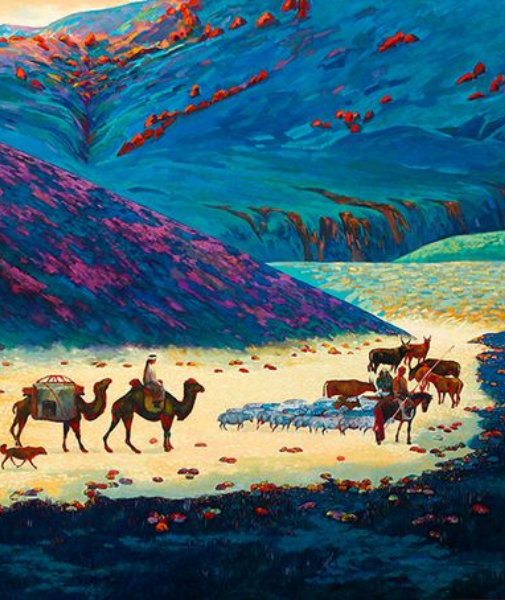
Otor

Bayarbaatar Selee , 2004 , Oil On Canvas

In the epic and visually commanding Otor, Bayarbaatar Selee captures the profound, timeless essence of the nomadic tradition, turning the act of seasonal migration into a cinematic tapestry of endurance. Measuring a staggering 139.5 x 154 cm (54″ x 60″), this 2005 oil on canvas is a tour de force of scale and ambition, perfectly balanced in a nearly square, immersive format that demands the viewer’s full presence. The unique selling point of this masterpiece is Selee’s signature “narrative texture”—a technique that marries robust, impasto-laden depictions of the landscape and figures with ethereal, atmospheric glazes that suggest the dust and light of the vast steppe. This technical duality creates a sense of kinetic, breathing energy; the painting feels as though it is in constant, gentle motion, echoing the eternal journey of the nomadic lifestyle. For the discerning collector, Otor is more than an acquisition—it is an anchor for a high-end space, a sophisticated, intellectually weighty focal point that bridges the gap between historical heritage and contemporary artistic excellence, bringing the expansive spirit of Mongolia into the heart of any curated interior.

About the Artist

Born in 1964 in Ulaanbaatar, Mongolia, Bayarbaatar Selee is an acclaimed contemporary artist renowned for his ability to translate the raw, austere beauty of the Mongolian landscape and the authentic rhythms of daily life into deeply resonant, high-impact figurative works. His practice is characterized by a sophisticated, nuanced approach to light and composition, often focusing on themes of heritage, resilience, and the intimate connections between people and their environment. With a career spanning decades, Selee has earned significant recognition for his evocative, painterly style, which bridges the gap between traditional realism and contemporary emotional storytelling, securing his place as a vital, enduring voice in modern Central Asian art.
  • Bayarbaatar Selee
  • Early 21st Century
  • Ulaanbaatar, Mongolia
  • Figurative, Landscape, Modern/Contemporary, Nature, Realism
  • Oil on canvas
  • BYR10/004
  • 139.5 x 154cm54" x 60"
  • Mongolian Art Gallery

Add Your Comment

Mongolian Art Gallery © 2025. All Rights Reserved
Privacy Policy / Terms of Use

In the epic and visually commanding Otor, Bayarbaatar Selee captures the profound, timeless essence of the nomadic tradition, turning the act of seasonal migration into a cinematic tapestry of endurance. Measuring a staggering 139.5 x 154 cm (54″ x 60″), this 2005 oil on canvas is a tour de force of scale and ambition, perfectly balanced in a nearly square, immersive format that demands the viewer’s full presence. The unique selling point of this masterpiece is Selee’s signature “narrative texture”—a technique that marries robust, impasto-laden depictions of the landscape and figures with ethereal, atmospheric glazes that suggest the dust and light of the vast steppe. This technical duality creates a sense of kinetic, breathing energy; the painting feels as though it is in constant, gentle motion, echoing the eternal journey of the nomadic lifestyle. For the discerning collector, Otor is more than an acquisition—it is an anchor for a high-end space, a sophisticated, intellectually weighty focal point that bridges the gap between historical heritage and contemporary artistic excellence, bringing the expansive spirit of Mongolia into the heart of any curated interior.

About the Artist

Born in 1964 in Ulaanbaatar, Mongolia, Bayarbaatar Selee is an acclaimed contemporary artist renowned for his ability to translate the raw, austere beauty of the Mongolian landscape and the authentic rhythms of daily life into deeply resonant, high-impact figurative works. His practice is characterized by a sophisticated, nuanced approach to light and composition, often focusing on themes of heritage, resilience, and the intimate connections between people and their environment. With a career spanning decades, Selee has earned significant recognition for his evocative, painterly style, which bridges the gap between traditional realism and contemporary emotional storytelling, securing his place as a vital, enduring voice in modern Central Asian art.