Girl With Horse

Batjargal Tseintsogzol , 2008 , Oil On Canvas

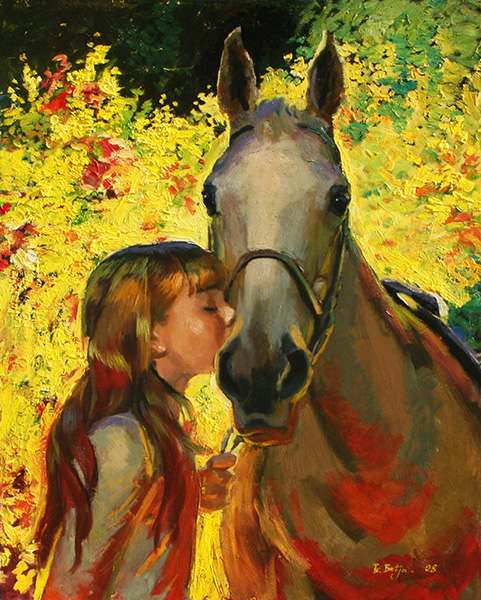
The painting is a vertical composition (80 x 60 cm) that presents an intimate, close-up study of the relationship between a young Mongolian girl and her horse. Unlike grand landscapes that emphasize the vastness of the Gobi, this work focuses on inner life and connection.

  • The Girl: Occupying the central foreground, she is depicted with striking photorealistic detail. Her features—sun-kissed skin, rosy “steppe” cheeks, and dark, observant eyes—reflect the hardiness and grace of youth in rural Mongolia. Her expression is one of quiet confidence and deep-seated peace.

  • The Horse: The horse is not merely a background element but a co-protagonist. Tseintsogzol uses his mastery of texture to render the horse’s coat, the softness of its muzzle, and the intelligence in its eye. The physical proximity of the two subjects suggests a bond that is fundamental, not transactional.

Technique and Style

As a proponent of Photorealism and Nature, Tseintsogzol’s technique in this 2008 oil-on-canvas is meticulous:

  • Lighting: The light appears natural and diffused, likely mimicking the “golden hour” of the Mongolian plains. This creates a soft glow on the girl’s face and highlights the intricate textures of her traditional clothing (Deel) and the horse’s mane.

  • Color Palette: The artist utilizes an earthy, organic palette. Expect deep ochres, rich browns, and subtle sky blues. These colors ground the painting in the natural world, reinforcing the “Nature” style he is associated with.

  • Texture: One of the most compelling aspects of the work is the contrast in textures—the smoothness of the girl’s skin against the coarse hair of the horse and the heavy fabric of her garments.

Cultural Context

Batjargal Tseintsogzol (1966–2020) lived through Mongolia’s transition from a socialist state to a democracy, yet his work consistently reached back to the timeless identity of his people.

“Girl With Horse” serves as a bridge between the ancient nomadic lifestyle and the modern era. It captures a moment of stillness in a culture that is defined by movement.

By focusing on a girl rather than a male warrior (a common trope in Mongolian art), Tseintsogzol highlights the inclusivity of the horse culture and the nurturing aspect of the Mongolian spirit.
  • Batjargal Tseintsogzol
  • Mongolian Style, Photorealism
  • Oil On Canvas
  • BTJ8/095
  • 80 x 60cm
  • Mongolian Art Gallery

Add Your Comment

Mongolian Art Gallery © 2025. All Rights Reserved
Privacy Policy / Terms of Use

The painting is a vertical composition (80 x 60 cm) that presents an intimate, close-up study of the relationship between a young Mongolian girl and her horse. Unlike grand landscapes that emphasize the vastness of the Gobi, this work focuses on inner life and connection.

  • The Girl: Occupying the central foreground, she is depicted with striking photorealistic detail. Her features—sun-kissed skin, rosy “steppe” cheeks, and dark, observant eyes—reflect the hardiness and grace of youth in rural Mongolia. Her expression is one of quiet confidence and deep-seated peace.

  • The Horse: The horse is not merely a background element but a co-protagonist. Tseintsogzol uses his mastery of texture to render the horse’s coat, the softness of its muzzle, and the intelligence in its eye. The physical proximity of the two subjects suggests a bond that is fundamental, not transactional.

Technique and Style

As a proponent of Photorealism and Nature, Tseintsogzol’s technique in this 2008 oil-on-canvas is meticulous:

  • Lighting: The light appears natural and diffused, likely mimicking the “golden hour” of the Mongolian plains. This creates a soft glow on the girl’s face and highlights the intricate textures of her traditional clothing (Deel) and the horse’s mane.

  • Color Palette: The artist utilizes an earthy, organic palette. Expect deep ochres, rich browns, and subtle sky blues. These colors ground the painting in the natural world, reinforcing the “Nature” style he is associated with.

  • Texture: One of the most compelling aspects of the work is the contrast in textures—the smoothness of the girl’s skin against the coarse hair of the horse and the heavy fabric of her garments.

Cultural Context

Batjargal Tseintsogzol (1966–2020) lived through Mongolia’s transition from a socialist state to a democracy, yet his work consistently reached back to the timeless identity of his people.

“Girl With Horse” serves as a bridge between the ancient nomadic lifestyle and the modern era. It captures a moment of stillness in a culture that is defined by movement.

By focusing on a girl rather than a male warrior (a common trope in Mongolian art), Tseintsogzol highlights the inclusivity of the horse culture and the nurturing aspect of the Mongolian spirit.